Summary
DEXON was developed by COBINHOOD, the first zero-fee cryptocurrency exchange, and owned by DEXON Foundation, a peer-to-peer transaction system capable of processing transfers in under one second. The foundation aimed to make decentralised technology accessible to users at all levels. DEXON Wallet was its flagship consumer product: the entry point for storing DXN, DRC-20, and ETH assets, and accessing DApps directly from mobile.
But in 2018, blockchain was still too complex for most people to access. To build a truly decentralised ecosystem and give users the ability to own their coins and digital identity with privacy, DEXON Wallet needed to work for everyone, not just developers.
As UX Team Lead and the only product designer on the project, I owned the wallet experience end-to-end, from research direction to launch. The wallet shipped as a 5-star app on day one and helped the company raise $2.25M in 3 days from investors worldwide.
Designed the first mobile blockchain wallet for everyday users, 5-star rated and contributed to a $2.25M raise at mainnet launch.
Role
UX Lead · Product Designer
Scope
Mobile Payment Wallet · B2C
Duration
6 months
Summary
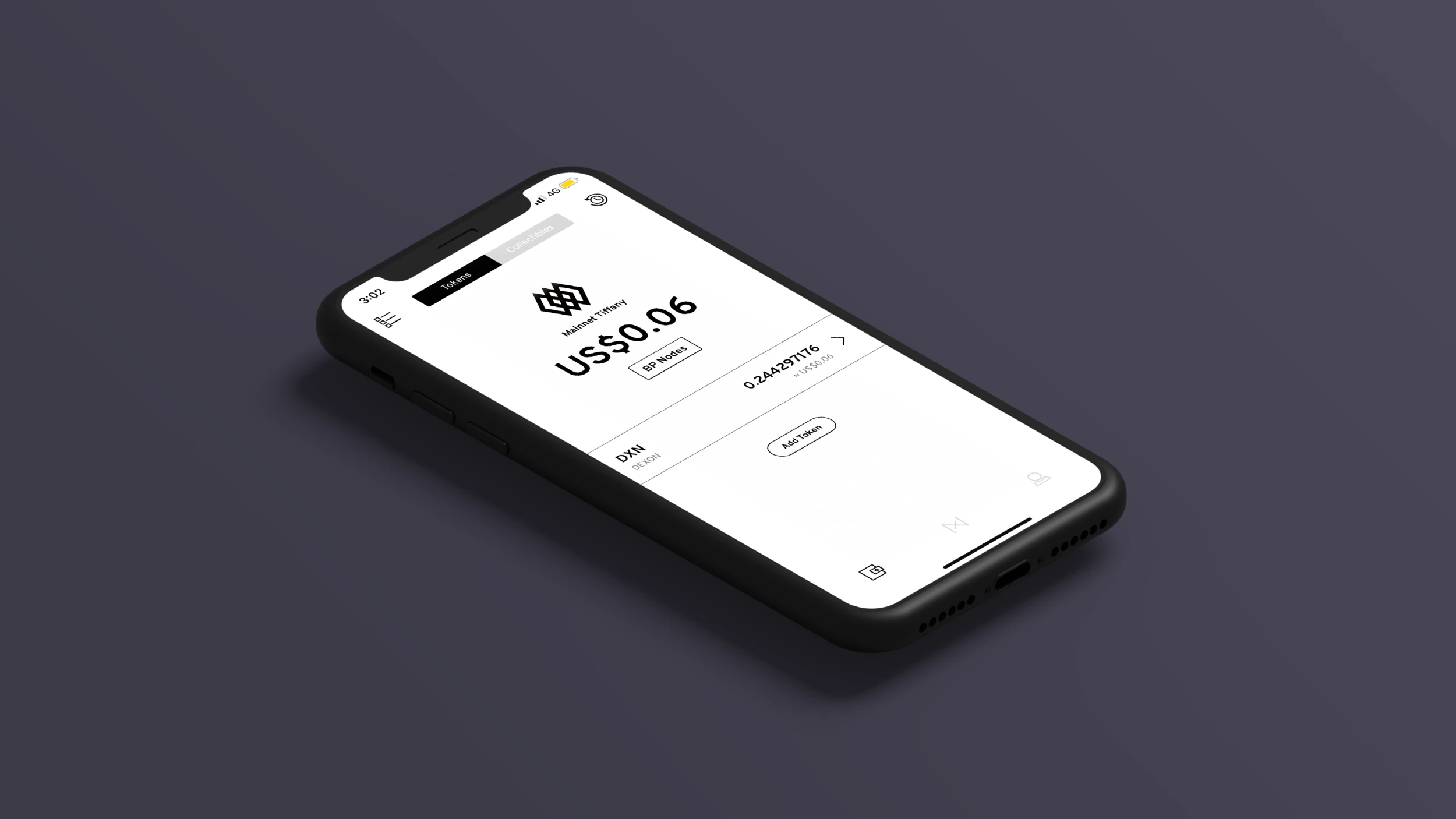
DEXON was developed by COBINHOOD, the first zero-fee cryptocurrency exchange, and owned by DEXON Foundation, a peer-to-peer transaction system capable of processing transfers in under one second. The foundation aimed to make decentralised technology accessible to users at all levels. DEXON Wallet was its flagship consumer product: the entry point for storing DXN, DRC-20, and ETH assets, and accessing DApps directly from mobile.
But in 2018, blockchain was still too complex for most people to access. To build a truly decentralised ecosystem and give users the ability to own their coins and digital identity with privacy, DEXON Wallet needed to work for everyone, not just developers.
As UX Team Lead and the only product designer on the project, I owned the wallet experience end-to-end, from research direction to launch. The wallet shipped as a 5-star app on day one and helped the company raise $2.25M in 3 days from investors worldwide.
About DEXON
wallet
DEXON was developed by COBINHOOD, the first zero-fee cryptocurrency exchange, and owned by DEXON Foundation, a peer-to-peer transaction system capable of processing transfers in under one second. The foundation aimed to make decentralised technology accessible to users at all levels. DEXON Wallet was its flagship consumer product: the entry point for storing DXN, DRC-20, and ETH assets, and accessing DApps directly from mobile.
But in 2018, blockchain was still too complex for most people to access. To build a truly decentralised ecosystem and give users the ability to own their coins and digital identity with privacy, DEXON Wallet needed to work for everyone, not just developers.
As UX Team Lead and the only product designer on the project, I owned the wallet experience end-to-end, from research direction to launch. The wallet shipped as a 5-star app on day one and helped the company raise $2.25M in 3 days from investors worldwide.
Problems
Existing wallets were desktop-first with fragmented onboarding.
In 2018, the most widely used crypto wallets, MetaMask and MyEtherWallet, were browser extensions designed for people who already understood how blockchain worked. Creating an account meant managing private keys with no recovery path. Sending funds meant tracking transaction status across multiple external tools. The apps that did exist on mobile were not always listed on major app stores. The cognitive load was prohibitive, and mistakes were permanent.
DEXON needed to reach a much wider audience, not just to grow its user base, but to attract developers who would build on the ecosystem. Without mainstream accessibility, scalability would always be theoretical.
Mainstream users had no reason to trust mobile blockchain products.
Beyond usability, there was a credibility gap. Blockchain apps were widely seen as experimental and unstable. In 2018, the space was strongly associated with scams, volatility, and complexity. For someone curious about decentralised technology but without a technical background, there was nothing that felt legitimate or safe enough to store real value in. DEXON Wallet needed to change that.
Design process
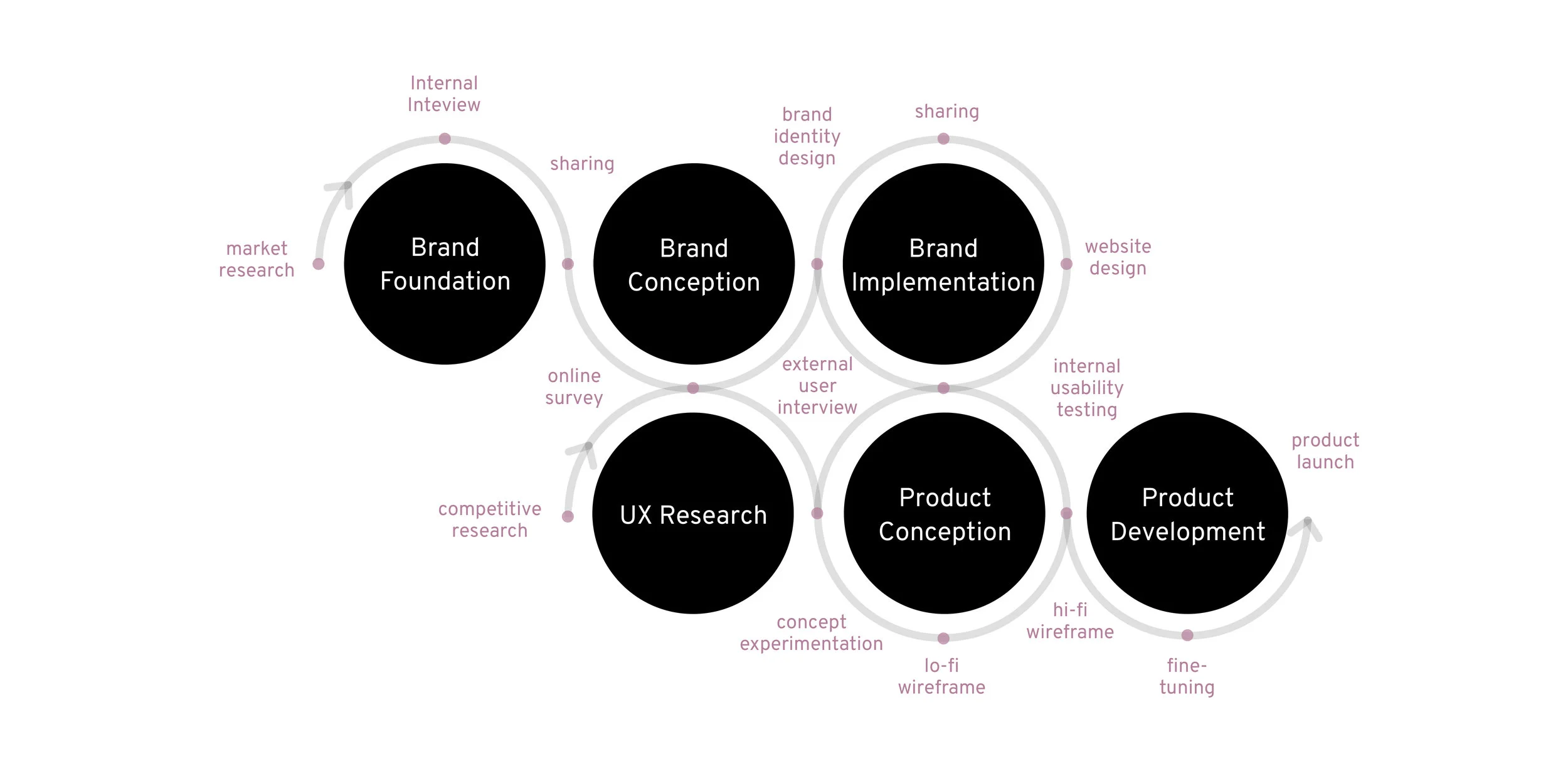
As a 0→1 project, branding and product ran in parallel from day one. I defined the design process and review cadence across both workstreams, directing the UI designer and UX researchers on product, while aligning with the brand manager and marketing team to ensure visual and product decisions stayed coherent. I owned the design timeline to mainnet.
Research
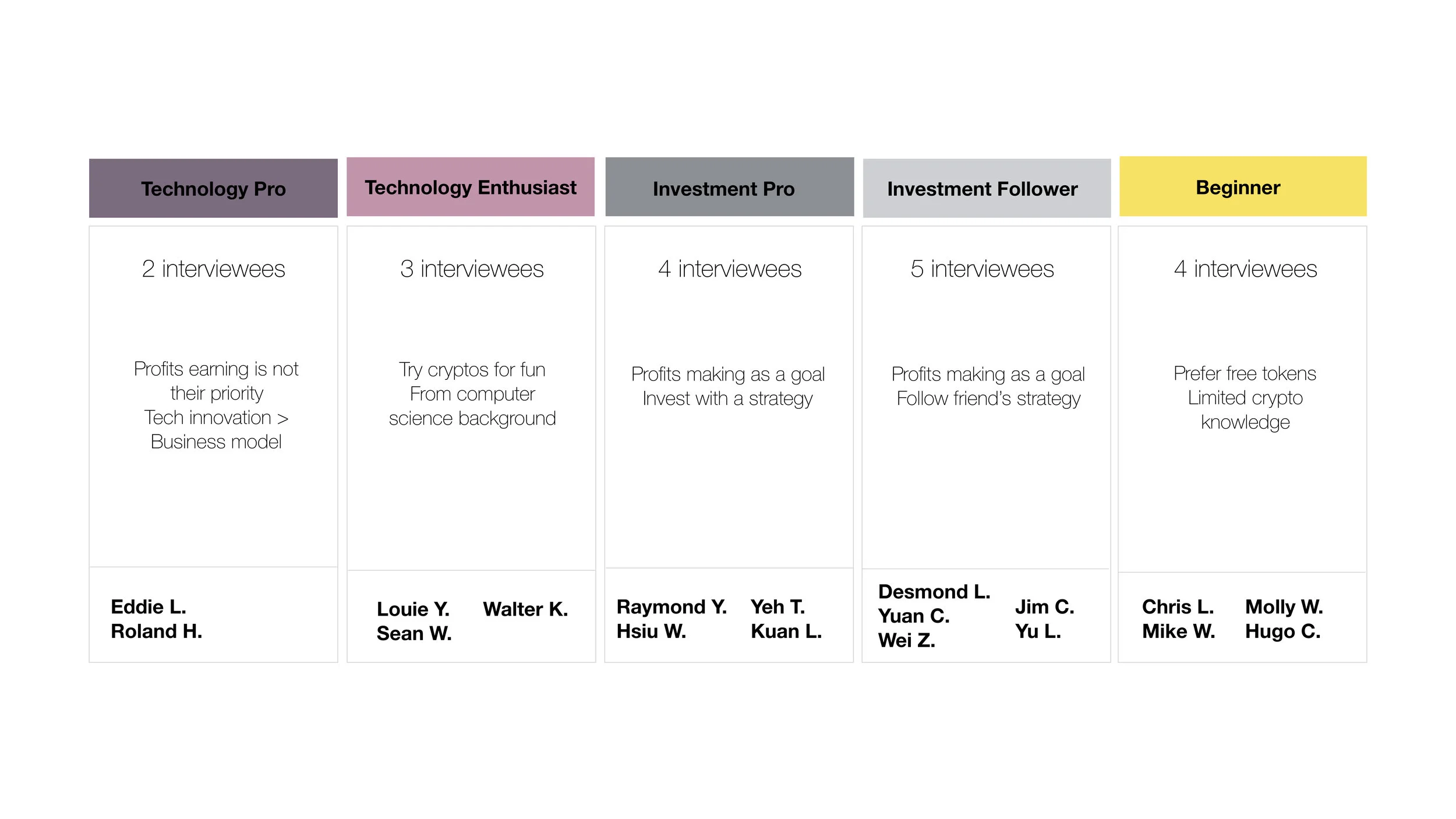
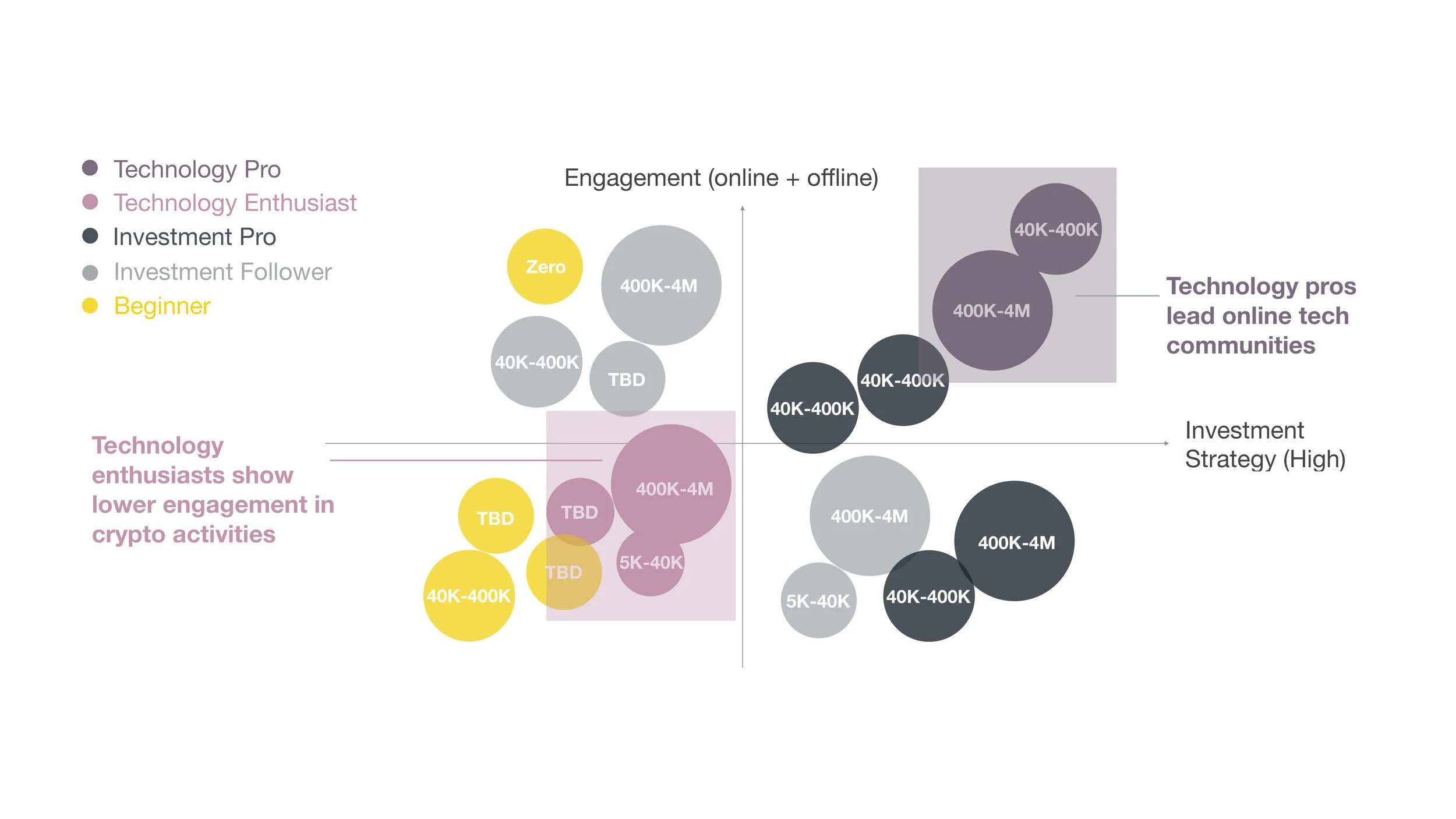
I directed the research strategy with two senior UX researchers. We ran a global online survey with 1,250 respondents in October 2018, then selected 20 people for in-depth offline interviews to understand their real relationship with blockchain, DApps, and mobile payments. We mapped five user types as listed above.
From the global online survey, we found that safety and curiosity are the main reasons for trying new DApps. So we designed an ultra-secure decentralised wallet with a DApp store built in for users to explore.
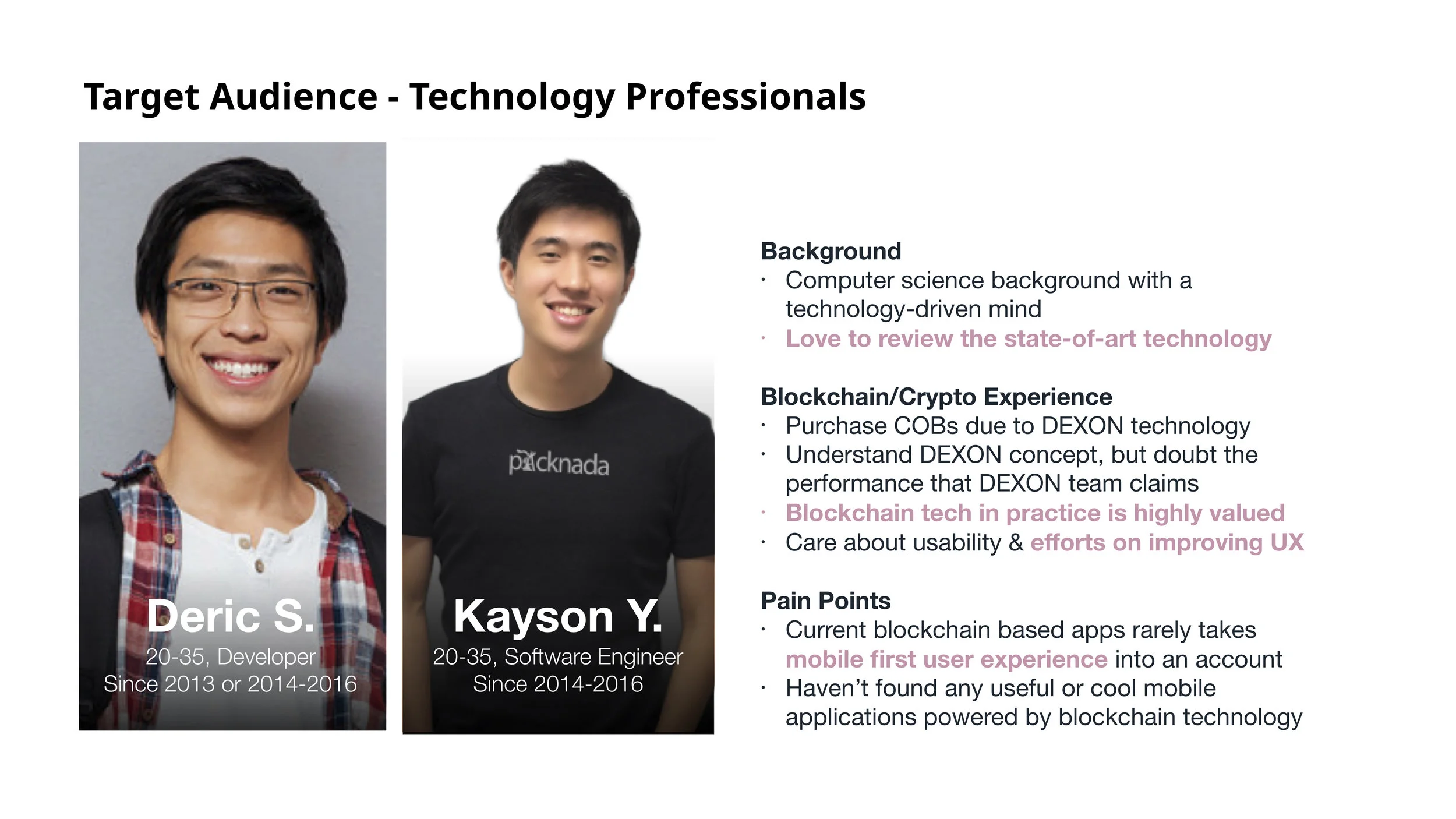
Technology Professionals are influencers who lead the blockchain and cryptocurrency community. They are also early adopters who contribute to the development of blockchain technology. We aimed to focus on attracting tech pros to build applications and influence more contributors in the DEXON ecosystem. In the long run, the ecosystem could invite users from all levels to use it.
Prioritisation
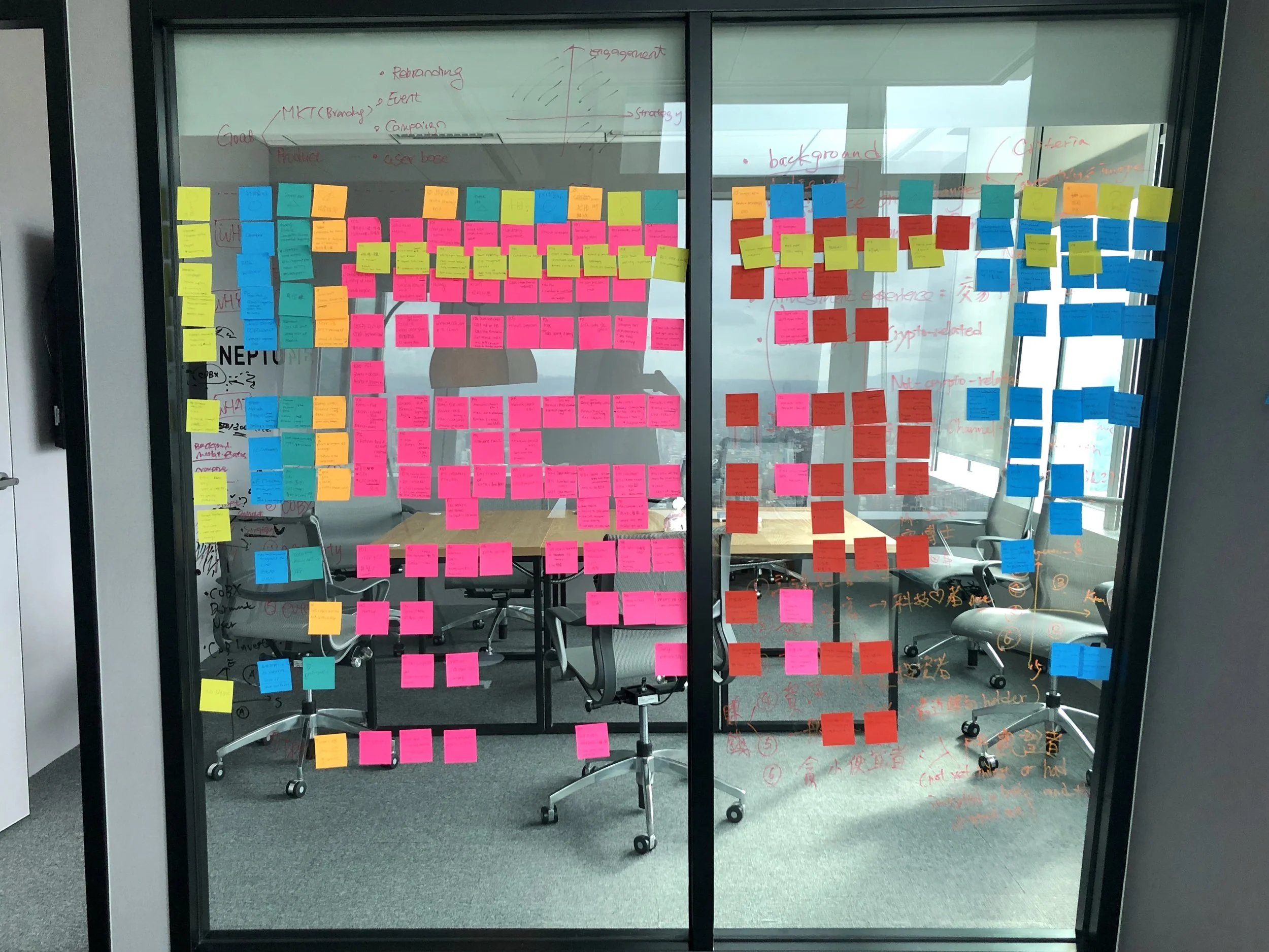
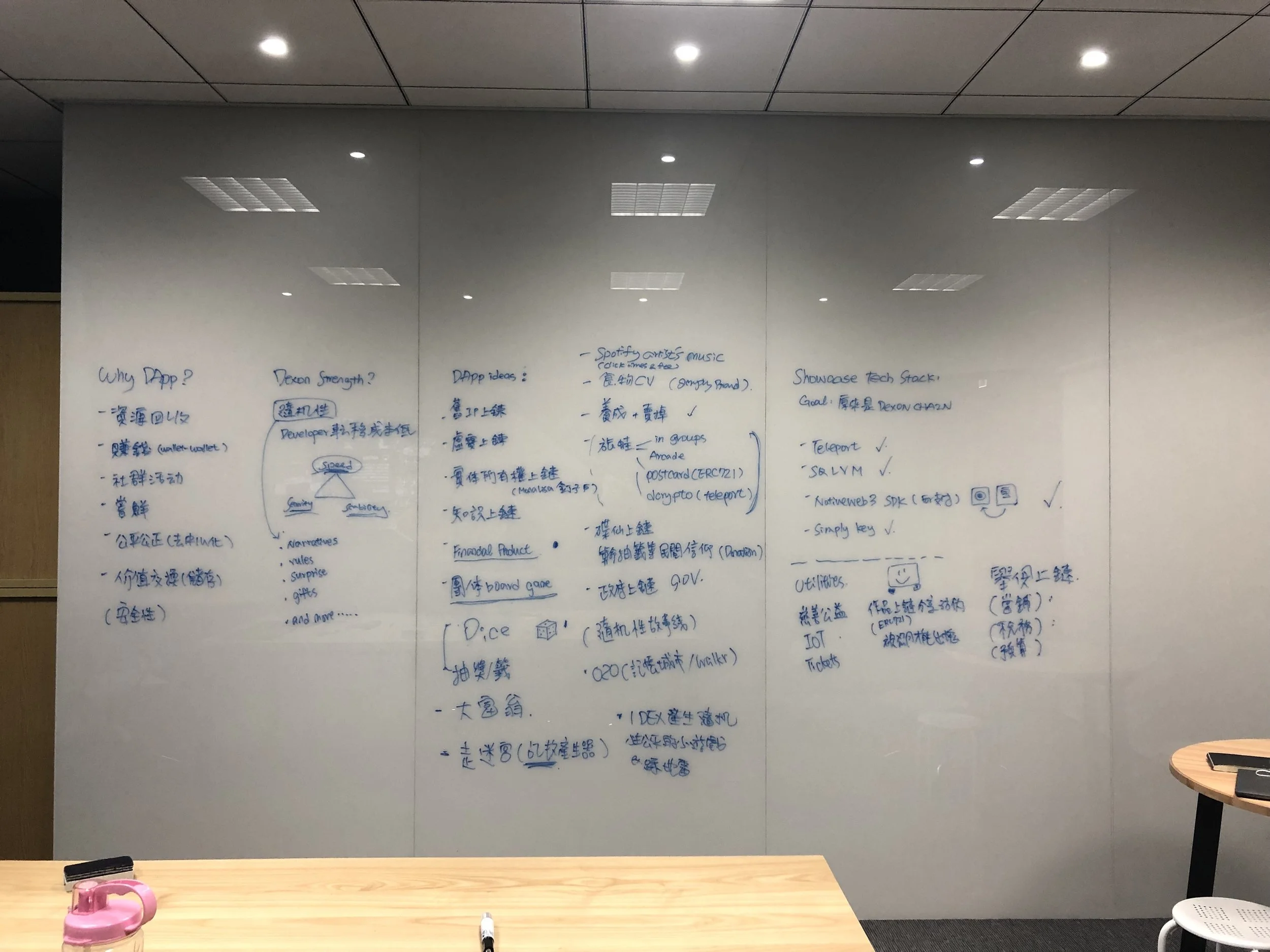
I summarised the research findings on the wall in the UX corner and hosted internal design workshops and invited the marketing director and managers to align the whole company on market trends, target audience, and product USP before a single screen was designed.
The UX corner in the company welcome everyone in the company to contribute to the wallet we are building and learning about other folk and user's perspective.
With a fixed mainnet launch date and six months on the clock, I worked with the CPO to define what had to be right at launch: get set up in under a minute, send and receive without confusion, and make the ecosystem feel alive and worth exploring from day one.
Everything else, advanced token management, market pricing, exchange features, was intentionally deferred. A wallet people trusted and could actually use was worth more at launch than a feature-complete product nobody understood.
We converged on a clear direction: rather than a pure currency wallet, we would build a DApp-first product with gaming and social elements, something users at any level could explore, not just hold tokens in.
UX audit
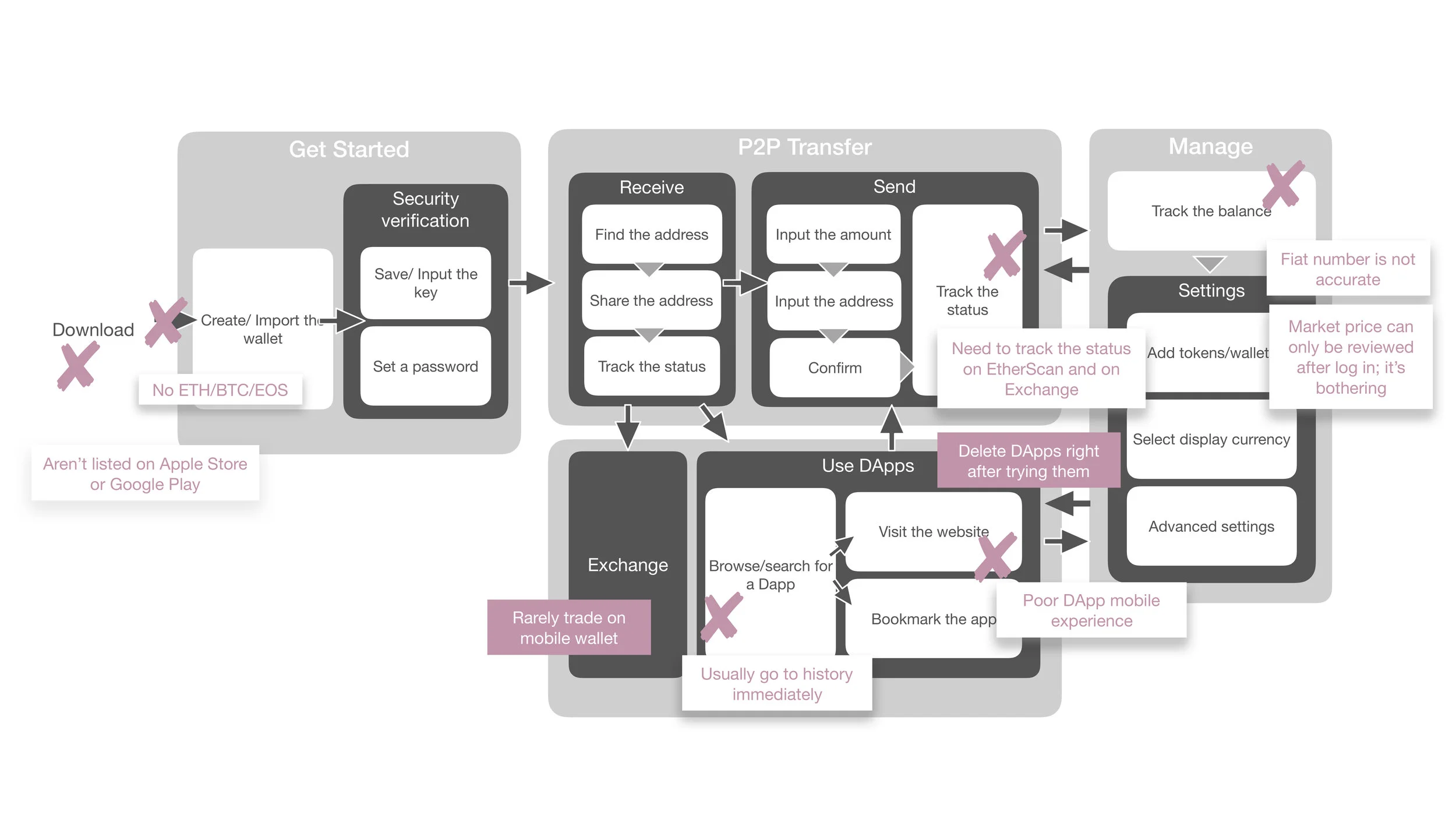
Across 20 usability sessions and in-depth interviews, 3 failure patterns emerged consistently:
Onboarding was broken: Long, technical, and unforgiving with no recovery path.
Transaction status was invisible: Users had to leave the app and check EtherScan manually to confirm whether a transfer had completed as the technology took too long to complete the transaction.
DApp discovery did not exist on mobile: Desktop was still the primary touch point, leaving mobile users with no meaningful way to explore the ecosystem.
These findings directly shaped the design direction: a mobile-first, DApp Store based digital wallet as the gateway for tech professionals to explore the DEXON ecosystem.
Conception
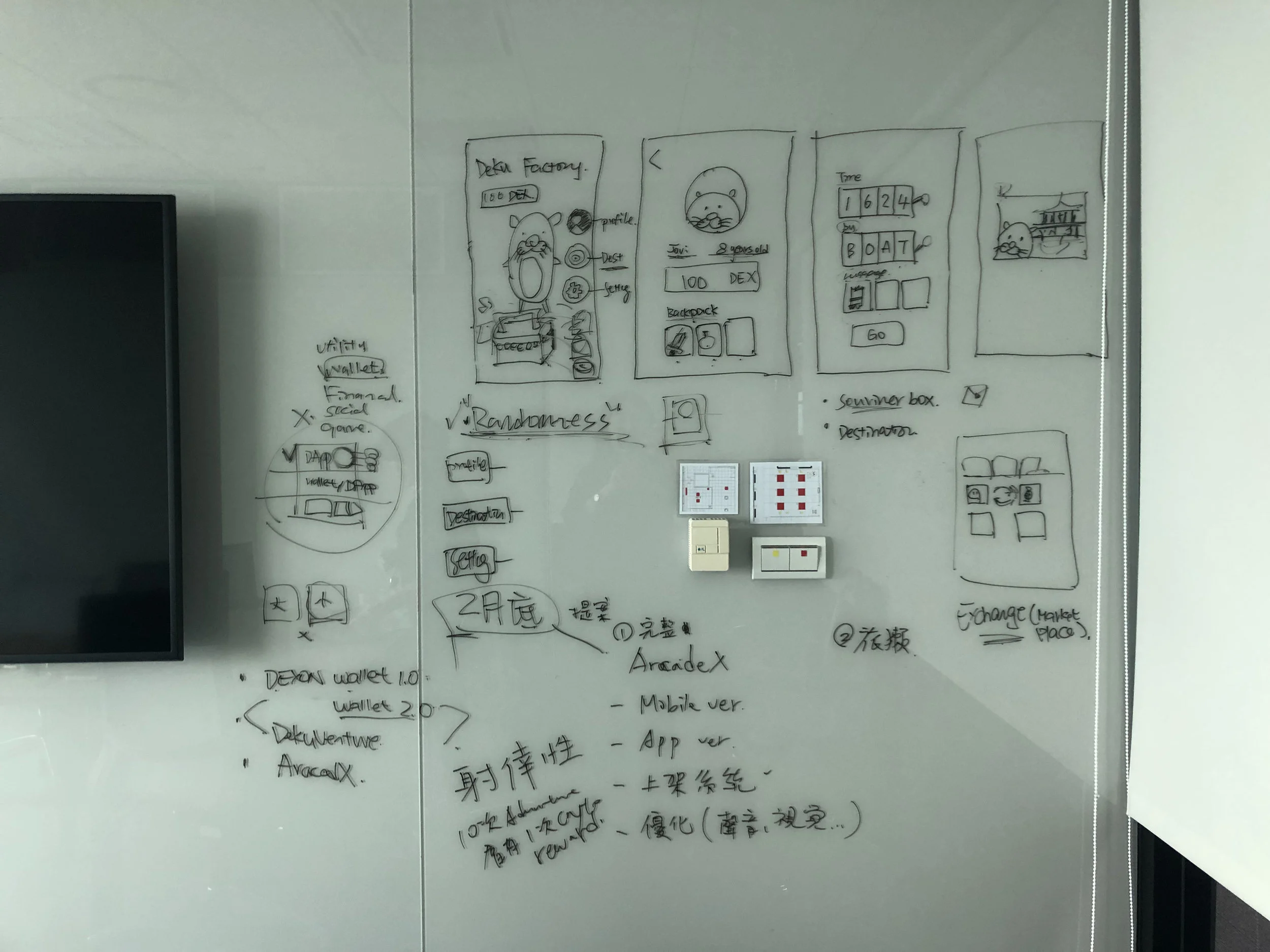
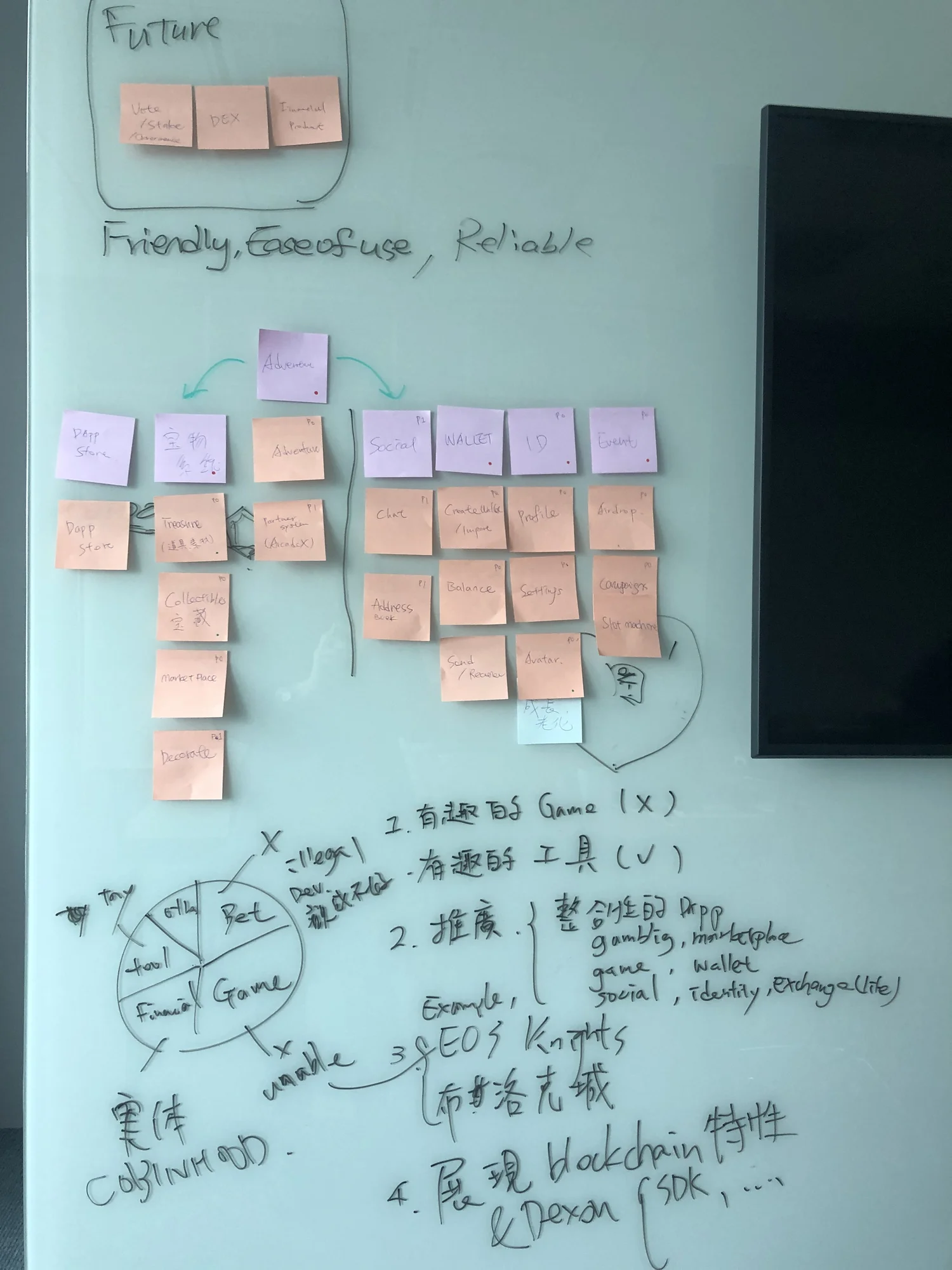
I hosted a few brainstorm sessions with UX researchers, UI designers and product managers to get some feedback from list of ideas for wallet USP.
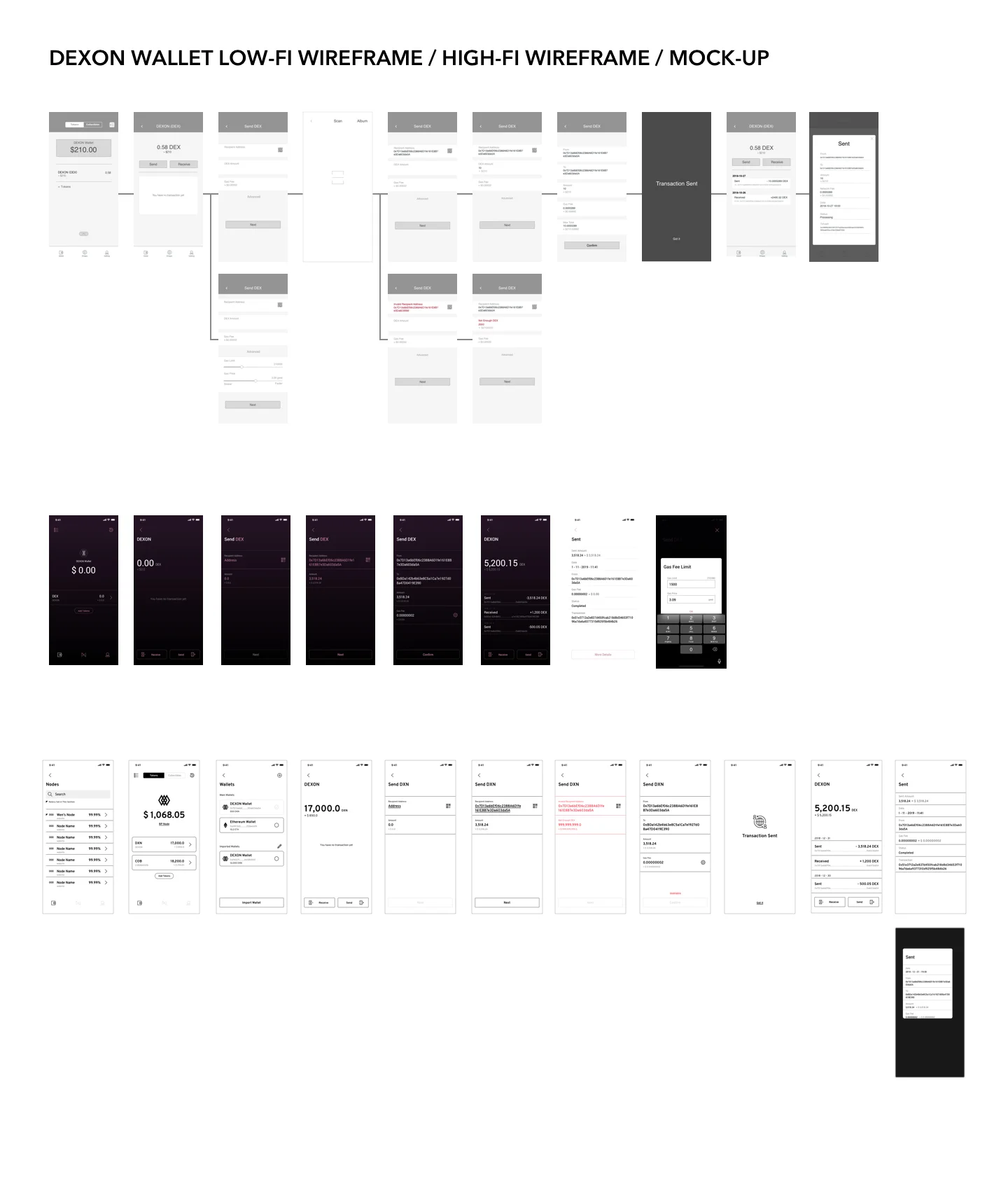
The initial wallet wireframe I was working on during the UX session. I tried to evolve the concept to a more gaming and avatar based product for the users from all levels to play with easily.
Design
solutions
Onboarding in under 10 seconds
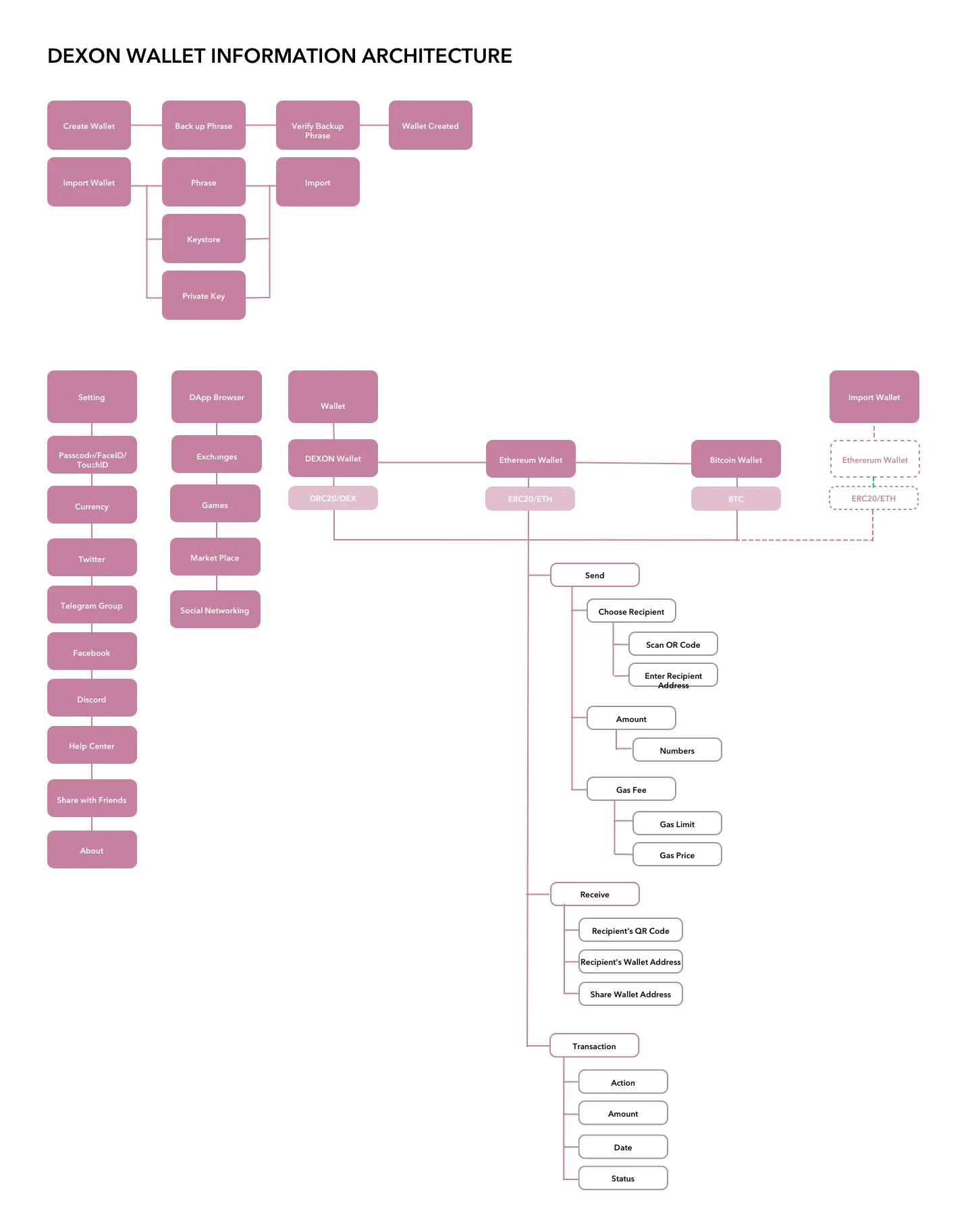
I redesigned account creation into a single guided flow - no private key management, no prior crypto knowledge needed. Users at all levels could transact with speed and confidence from the start.
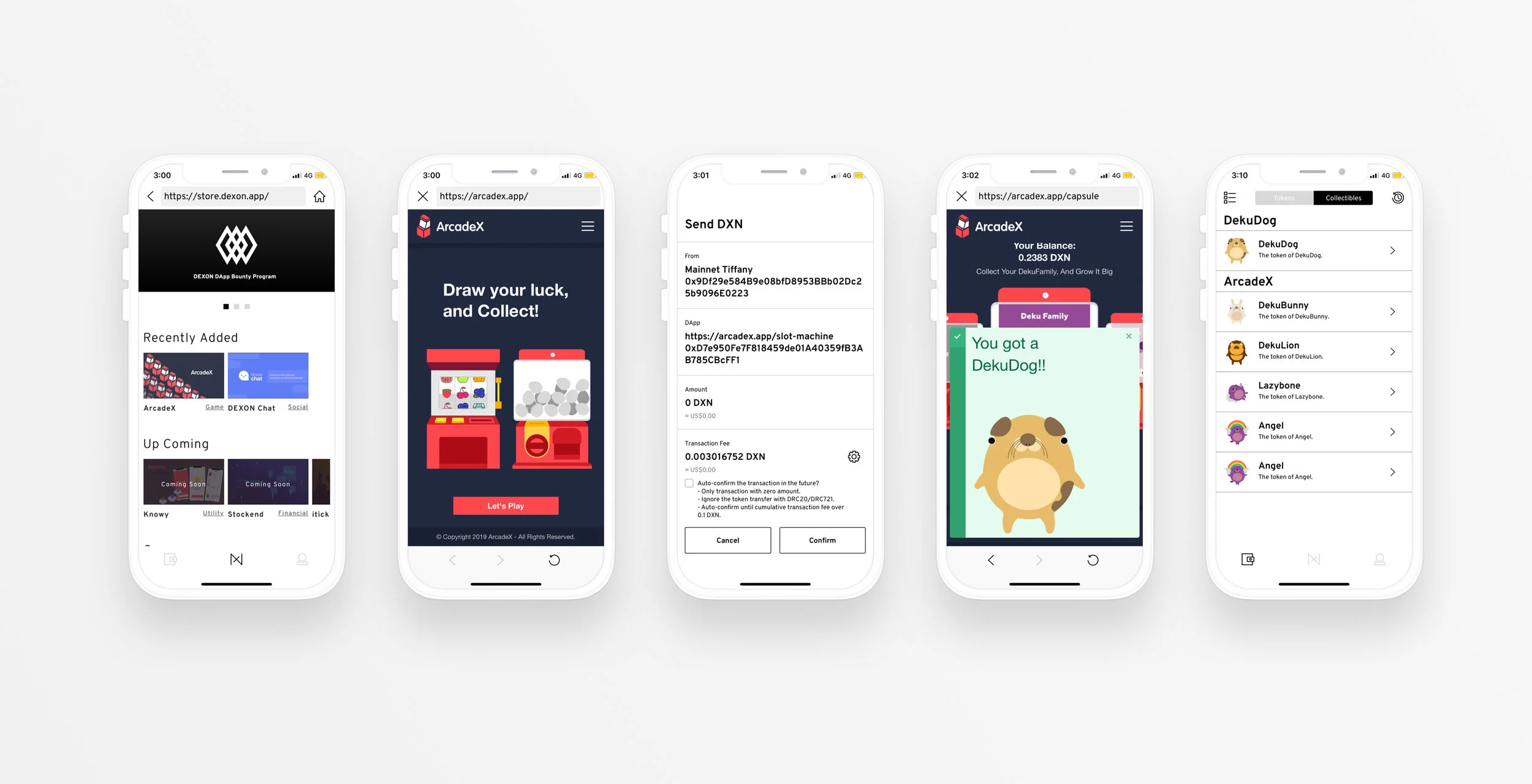
Users can manage multi-chain coins in one wallet
DEXON wallet supports DXN, DRC-20, and ETH/ERC-20, so users can manage all their assets without downloading multiple wallets.
DApp Store as the gateway
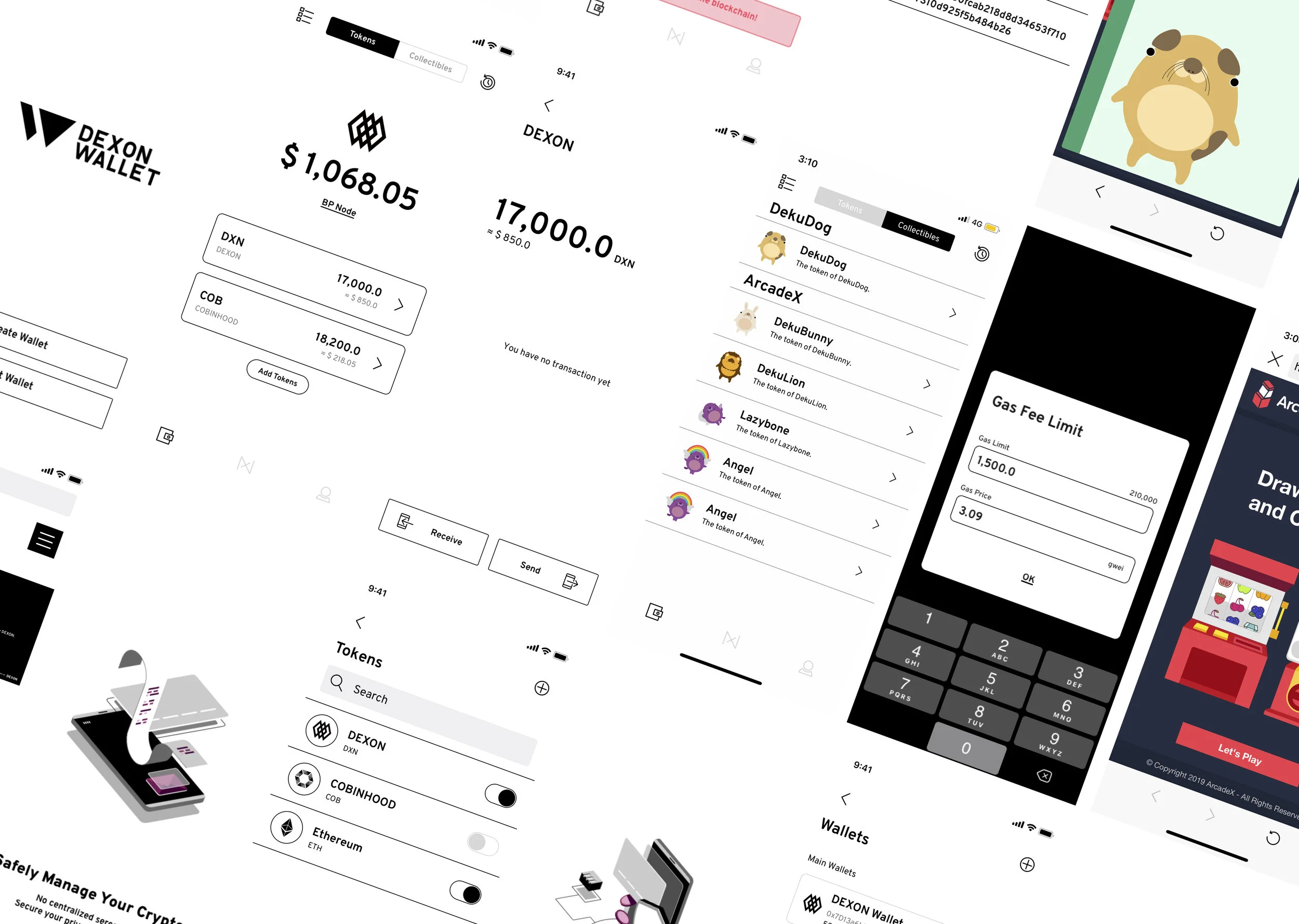
Research showed Technology Professionals wanted to build and explore, not just hold tokens. I positioned the DApp Store as a first-class destination inside the wallet - not buried in settings. This made DEXON Wallet a platform, not just a payment tool, and gave technical users a reason to stay and bring others in.
Deliverables
The wallet launched alongside the full DEXON product suite:
DEXON Wallet - mobile payment wallet on iOS and Android
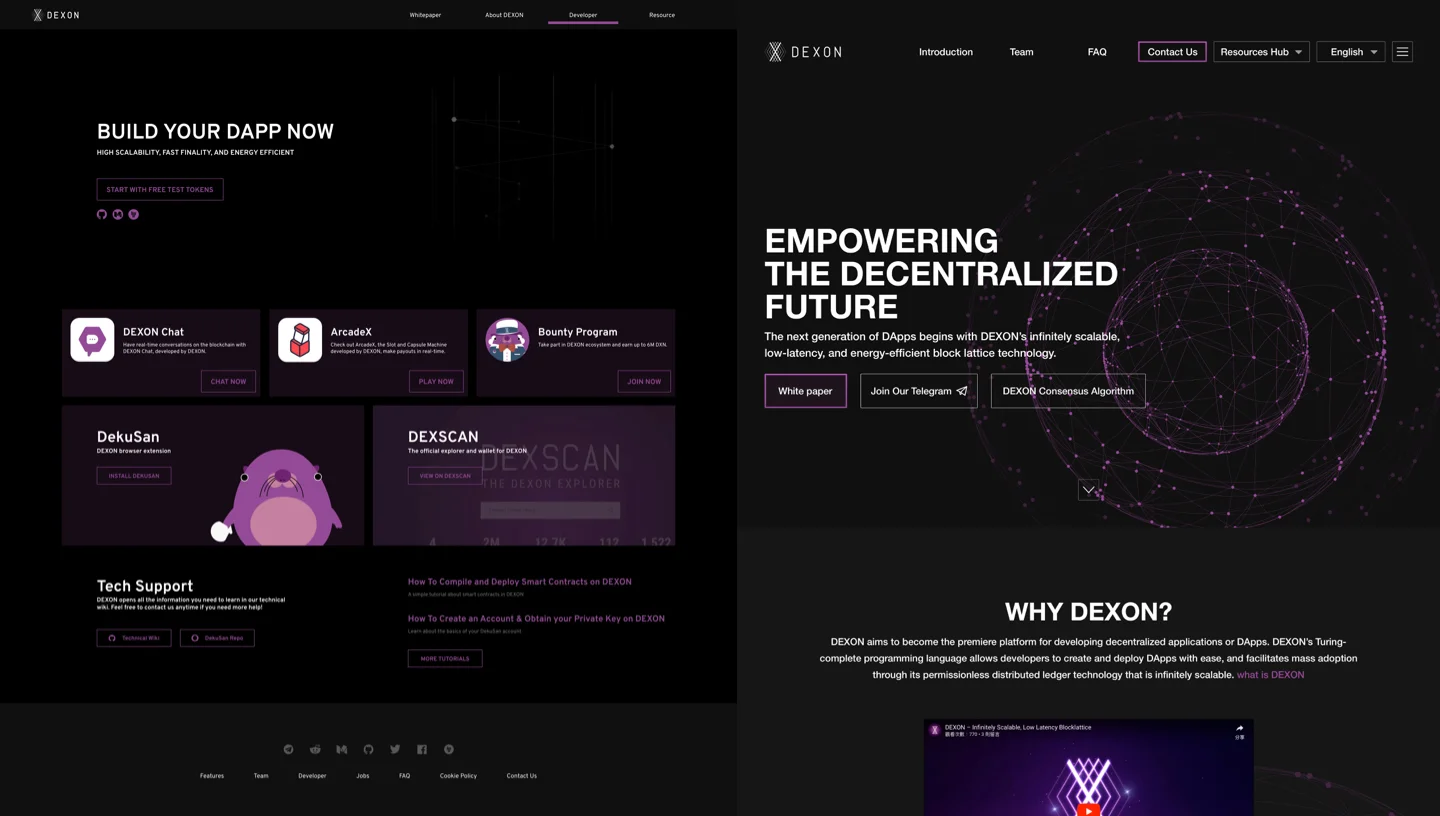
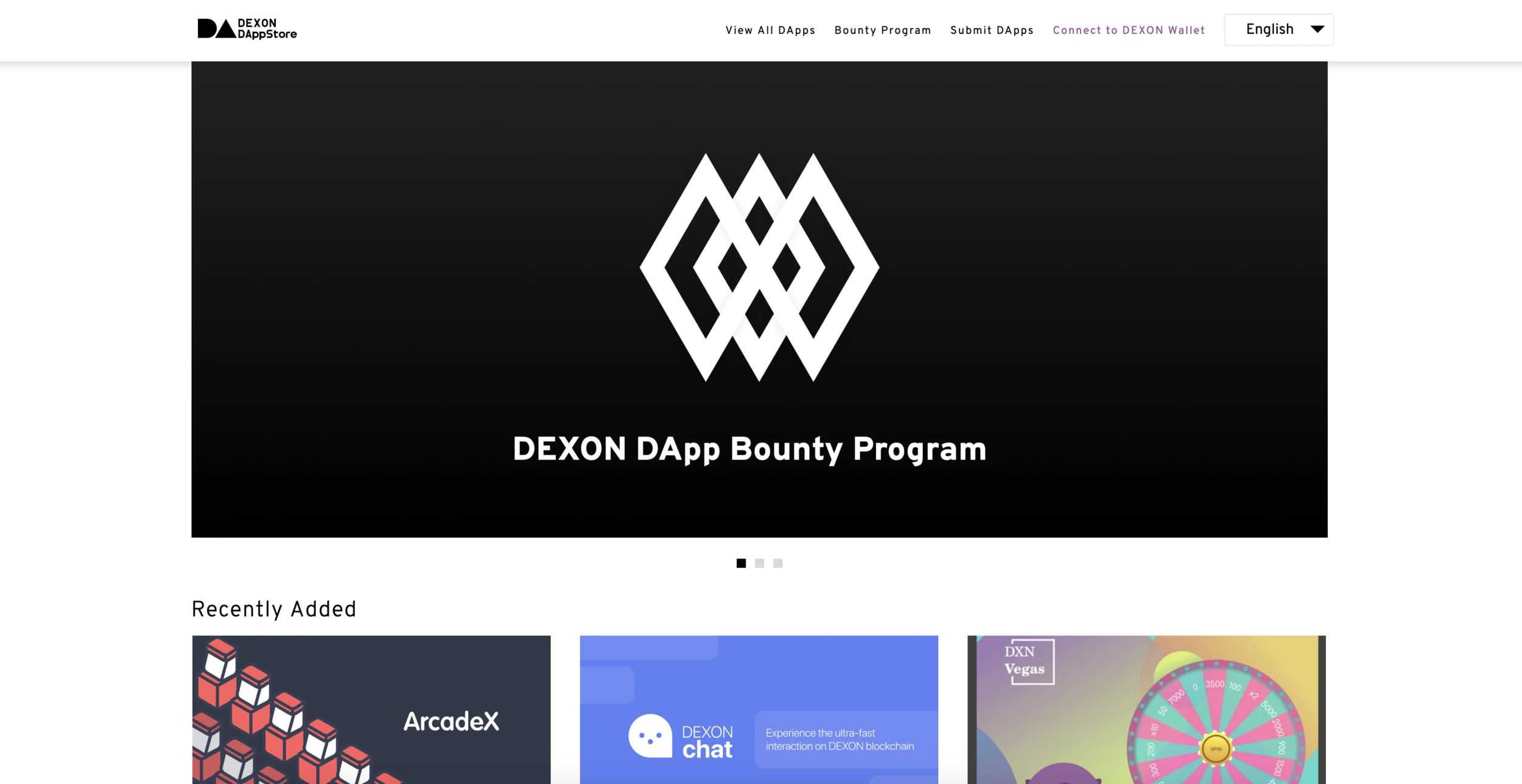
DEXON DApp Store - curated marketplace for verified DApps on the DEXON mainnet
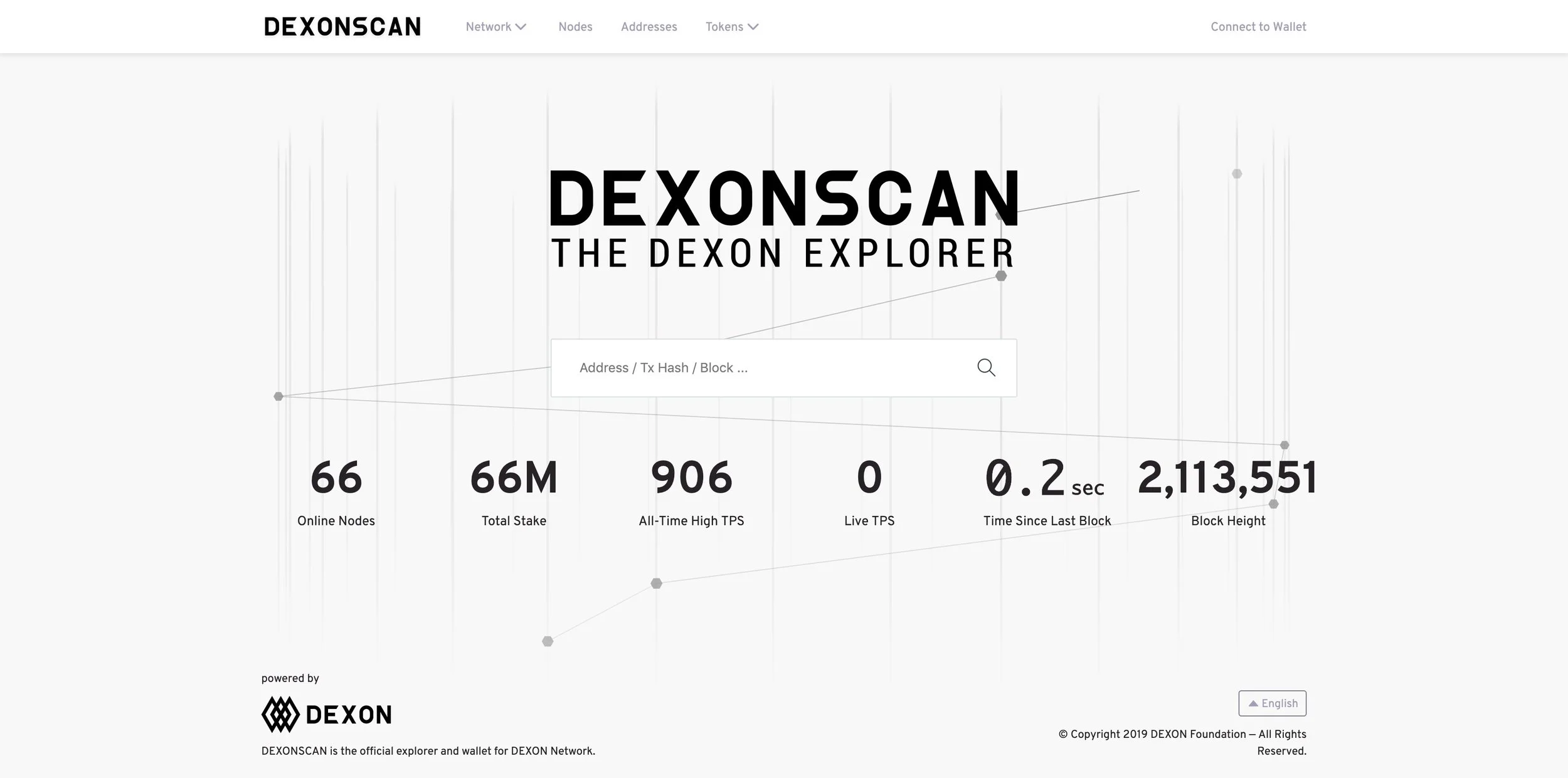
DEXONSCAN - live blocklattice explorer
ArcadeX, DEXON Chat, DekuSan - first DApps surfaced inside the wallet at launch
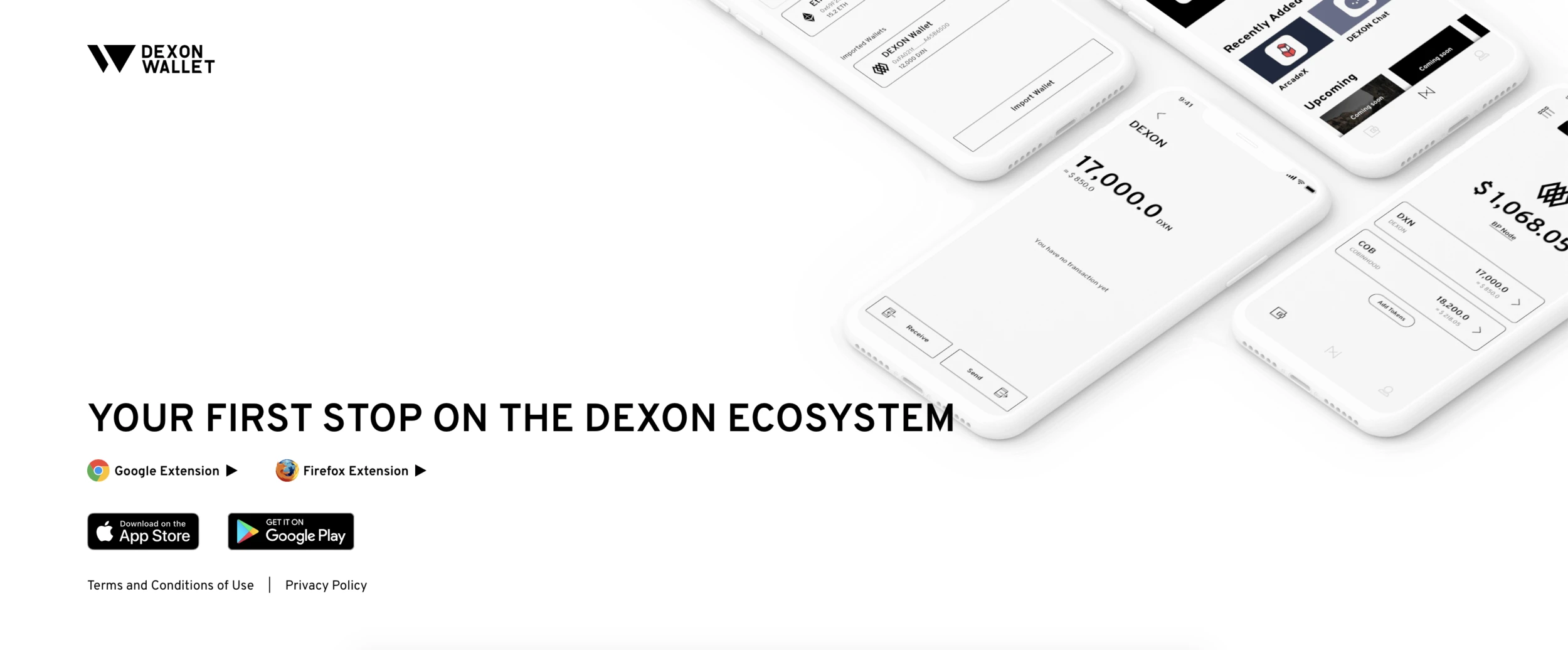
The wallet was the first decentralised wallet built for users at all levels on mobile, positioned as "Your First Stop on the DEXON Ecosystem."
Outcome
DEXON Wallet launched as a 5-star application on both the App Store and Google Play, with over 500 downloads on day one.
The product directly supported DEXON's investor story. The company raised $2.25M in 3 days from investors worldwide.
DEXON Wallet also served as the gateway for users entering the blockchain world.
The project established DEXON's first product design process and built UX culture within an engineering-driven workplace.
About DEXON wallet
DEXON was developed by COBINHOOD, the first zero-fee cryptocurrency exchange, and owned by DEXON Foundation, a peer-to-peer transaction system capable of processing transfers in under one second. The foundation aimed to make decentralised technology accessible to users at all levels. DEXON Wallet was its flagship consumer product: the entry point for storing DXN, DRC-20, and ETH assets, and accessing DApps directly from mobile.
But in 2018, blockchain was still too complex for most people to access. To build a truly decentralised ecosystem and give users the ability to own their coins and digital identity with privacy, DEXON Wallet needed to work for everyone, not just developers.
As UX Team Lead and the only product designer on the project, I owned the wallet experience end-to-end, from research direction to launch. The wallet shipped as a 5-star app on day one and helped the company raise $2.25M in 3 days from investors worldwide.
Problems
Existing wallets were desktop-first with fragmented onboarding.
In 2018, the most widely used crypto wallets, MetaMask and MyEtherWallet, were browser extensions designed for people who already understood how blockchain worked. Creating an account meant managing private keys with no recovery path. Sending funds meant tracking transaction status across multiple external tools. The apps that did exist on mobile were not always listed on major app stores. The cognitive load was prohibitive, and mistakes were permanent.
DEXON needed to reach a much wider audience, not just to grow its user base, but to attract developers who would build on the ecosystem. Without mainstream accessibility, scalability would always be theoretical.
Mainstream users had no reason to trust mobile blockchain products.
Beyond usability, there was a credibility gap. Blockchain apps were widely seen as experimental and unstable. In 2018, the space was strongly associated with scams, volatility, and complexity. For someone curious about decentralised technology but without a technical background, there was nothing that felt legitimate or safe enough to store real value in. DEXON Wallet needed to change that.
Design process
As a 0→1 project, branding and product ran in parallel from day one. I defined the design process and review cadence across both workstreams, directing the UI designer and UX researchers on product, while aligning with the brand manager and marketing team to ensure visual and product decisions stayed coherent. I owned the design timeline to mainnet.
Research
I directed the research strategy with two senior UX researchers. We ran a global online survey with 1,250 respondents in October 2018, then selected 20 people for in-depth offline interviews to understand their real relationship with blockchain, DApps, and mobile payments. We mapped five user types as listed above.
From the global online survey, we found that safety and curiosity are the main reasons for trying new DApps. So we designed an ultra-secure decentralised wallet with a DApp store built in for users to explore.
Technology Professionals are influencers who lead the blockchain and cryptocurrency community. They are also early adopters who contribute to the development of blockchain technology. We aimed to focus on attracting tech pros to build applications and influence more contributors in the DEXON ecosystem. In the long run, the ecosystem could invite users from all levels to use it.
Prioritisation
I hosted internal design workshops and invited the marketing director and managers to align the whole company on market trends, target audience, and product USP before a single screen was designed.
With a fixed mainnet launch date and six months on the clock, I worked with the CPO to define what had to be right at launch: get set up in under a minute, send and receive without confusion, and make the ecosystem feel alive and worth exploring from day one.
Everything else, advanced token management, market pricing, exchange features, was intentionally deferred. A wallet people trusted and could actually use was worth more at launch than a feature-complete product nobody understood.
We converged on a clear direction: rather than a pure currency wallet, we would build a DApp-first product with gaming and social elements, something users at any level could explore, not just hold tokens in.
UX audit
Across 20 usability sessions and in-depth interviews, 3 failure patterns emerged consistently:
Onboarding was broken: Long, technical, and unforgiving with no recovery path.
Transaction status was invisible: Users had to leave the app and check EtherScan manually to confirm whether a transfer had completed as the technology took too long to complete the transaction.
DApp discovery did not exist on mobile: Desktop was still the primary touch point, leaving mobile users with no meaningful way to explore the ecosystem.
These findings directly shaped the design direction: a mobile-first, DApp Store based digital wallet as the gateway for tech professionals to explore the DEXON ecosystem.
Conception
I hosted a few brainstorm sessions with UX researchers, UI designers and product managers to get some feedback from list of ideas for wallet USP.
The initial wallet wireframe I was working on during the UX session. I tried to evolve the concept to a more gaming and avatar based product for the users from all levels to play with easily.
Design solutions
Onboarding in under 10 seconds
I redesigned account creation into a single guided flow - no private key management, no prior crypto knowledge needed. Users at all levels could transact with speed and confidence from the start.
DApp Store as the gateway
Research showed Technology Professionals wanted to build and explore, not just hold tokens. I positioned the DApp Store as a first-class destination inside the wallet - not buried in settings. This made DEXON Wallet a platform, not just a payment tool, and gave technical users a reason to stay and bring others in.
Deliverables
The wallet launched alongside the full DEXON product suite:
DEXON Wallet - mobile payment wallet on iOS and Android
DEXON DApp Store - curated marketplace for verified DApps on the DEXON mainnet
DEXONSCAN - live blocklattice explorer
ArcadeX, DEXON Chat, DekuSan - first DApps surfaced inside the wallet at launch
The wallet was the first decentralised wallet built for users at all levels on mobile, positioned as "Your First Stop on the DEXON Ecosystem."
Outcome
DEXON Wallet launched as a 5-star application on both the App Store and Google Play, with over 500 downloads on day one.
The product directly supported DEXON's investor story. The company raised $2.25M in 3 days from investors worldwide.
DEXON Wallet also served as the gateway for users entering the blockchain world.
The project established DEXON's first product design process and built UX culture within an engineering-driven workplace.
Users can manage multi-chain coins in one wallet
DEXON wallet supports DXN, DRC-20, and ETH/ERC-20, so users can manage all their assets without downloading multiple wallets.
About DEXON wallet
DEXON Wallet lets users store and manage multi-chain coins and access DEXON-powered DApps directly from mobile. It was designed to be people's first stop in the blockchain world, own your coins, protect your identity, and explore the ecosystem, all in one place.
The project scope covered three non-negotiable constraints:
Switch and manage cryptocurrency wallets with ease
Design a mobile payment wallet
Meet the mainnet launch date
Problems
Existing wallets were desktop-first with fragmented onboarding.
In 2018, the most widely used crypto wallets, MetaMask and MyEtherWallet, were browser extensions designed for people who already understood how blockchain worked. Creating an account meant managing private keys with no recovery path. Sending funds meant tracking transaction status across multiple external tools. The apps that did exist on mobile were not always listed on major app stores. The cognitive load was prohibitive, and mistakes were permanent.
DEXON needed to reach a much wider audience, not just to grow its user base, but to attract developers who would build on the ecosystem. Without mainstream accessibility, scalability would always be theoretical.
Mainstream users had no reason to trust mobile blockchain products.
Beyond usability, there was a credibility gap. Blockchain apps were widely seen as experimental and unstable. In 2018, the space was strongly associated with scams, volatility, and complexity. For someone curious about decentralised technology but without a technical background, there was nothing that felt legitimate or safe enough to store real value in. DEXON Wallet needed to change that.
Design process
As a 0→1 project, branding and product ran in parallel from day one. I defined the design process and review cadence across both workstreams, directing the UI designer and UX researchers on product, while aligning with the brand manager and marketing team to ensure visual and product decisions stayed coherent. I owned the design timeline to mainnet.
Research
I directed the research strategy with two senior UX researchers. We ran a global online survey with 1,250 respondents in October 2018, then selected 20 people for in-depth offline interviews to understand their real relationship with blockchain, DApps, and mobile payments. We mapped five user types as listed above.
From the global online survey, we found that safety and curiosity are the main reasons for trying new DApps. So we designed an ultra-secure decentralised wallet with a DApp store built in for users to explore.
Technology Professionals are influencers who lead the blockchain and cryptocurrency community. They are also early adopters who contribute to the development of blockchain technology. We aimed to focus on attracting tech pros to build applications and influence more contributors in the DEXON ecosystem. In the long run, the ecosystem could invite users from all levels to use it.
Prioritisation
I hosted internal design workshops and invited the marketing director and managers to align the whole company on market trends, target audience, and product USP before a single screen was designed.
With a fixed mainnet launch date and six months on the clock, I worked with the CPO to define what had to be right at launch: get set up in under a minute, send and receive without confusion, and make the ecosystem feel alive and worth exploring from day one.
Everything else, advanced token management, market pricing, exchange features, was intentionally deferred. A wallet people trusted and could actually use was worth more at launch than a feature-complete product nobody understood.
We converged on a clear direction: rather than a pure currency wallet, we would build a DApp-first product with gaming and social elements, something users at any level could explore, not just hold tokens in.
UX audit
Across 20 usability sessions and in-depth interviews, 3 failure patterns emerged consistently:
Onboarding was broken: Long, technical, and unforgiving with no recovery path.
Transaction status was invisible: Users had to leave the app and check EtherScan manually to confirm whether a transfer had completed as the technology took too long to complete the transaction.
DApp discovery did not exist on mobile: Desktop was still the primary touch point, leaving mobile users with no meaningful way to explore the ecosystem.
These findings directly shaped the design direction: a mobile-first, DApp Store based digital wallet as the gateway for tech professionals to explore the DEXON ecosystem.
Conception
I hosted a few brainstorm sessions with UX researchers, UI designers and product managers to get some feedback from list of ideas for wallet USP.
The initial wallet wireframe I was working on during the UX session. I tried to evolve the concept to a more gaming and avatar based product for the users from all levels to play with easily.
Design solution
Onboarding in under 10 seconds
I redesigned account creation into a single guided flow - no private key management, no prior crypto knowledge needed. Users at all levels could transact with speed and confidence from the start.
Deliverables
The wallet launched alongside the full DEXON product suite:
DEXON Wallet - mobile payment wallet on iOS and Android
DEXON DApp Store - curated marketplace for verified DApps on the DEXON mainnet
DEXONSCAN - live blocklattice explorer
ArcadeX, DEXON Chat, DekuSan - first DApps surfaced inside the wallet at launch
The wallet was the first decentralised wallet built for users at all levels on mobile, positioned as "Your First Stop on the DEXON Ecosystem."
Outcome
DEXON Wallet launched as a 5-star application on both the App Store and Google Play, with over 500 downloads on day one.
The product directly supported DEXON's investor story. The company raised $2.25M in 3 days from investors worldwide.
DEXON Wallet also served as the gateway for users entering the blockchain world.
The project established DEXON's first product design process and built UX culture within an engineering-driven workplace.
Users can manage multi-chain coins in one wallet
DEXON wallet supports DXN, DRC-20, and ETH/ERC-20, so users can manage all their assets without downloading multiple wallets.
DApp Store as the gateway
Research showed Technology Professionals wanted to build and explore, not just hold tokens. I positioned the DApp Store as a first-class destination inside the wallet - not buried in settings. This made DEXON Wallet a platform, not just a payment tool, and gave technical users a reason to stay and bring others in.
Summary
DEXON was developed by COBINHOOD, the first zero-fee cryptocurrency exchange, and owned by DEXON Foundation, a peer-to-peer transaction system capable of processing transfers in under one second. The foundation aimed to make decentralised technology accessible to users at all levels. DEXON Wallet was its flagship consumer product: the entry point for storing DXN, DRC-20, and ETH assets, and accessing DApps directly from mobile.
But in 2018, blockchain was still too complex for most people to access. To build a truly decentralised ecosystem and give users the ability to own their coins and digital identity with privacy, DEXON Wallet needed to work for everyone, not just developers.
As UX Team Lead and the only product designer on the project, I owned the wallet experience end-to-end, from research direction to launch. The wallet shipped as a 5-star app on day one and helped the company raise $2.25M in 3 days from investors worldwide.
Other projects

Designing Content Moderation & Appeals at Scale
Cut moderation handling time by 50% and built a 0→1 appeals service that enabled scalable, DSA-compliant growth.
Cut moderation handling time by 50% and built a 0→1 appeals service that enabled scalable, DSA-compliant growth.
Reimagining BBFC’s Film Classification Platform
Cut report writing time by 50% and improved classification accuracy for 10K+ film reviews.